


Artificial intelligence is rapidly changing the workplace. Companies are increasingly relying on AI to evaluate employee performance, monitor productivity, and even make decisions about promotions and layoffs. But as these technologies become more common, they also raise an important legal question:
Can an employer violate employment discrimination laws by relying on AI to decide who gets laid off?
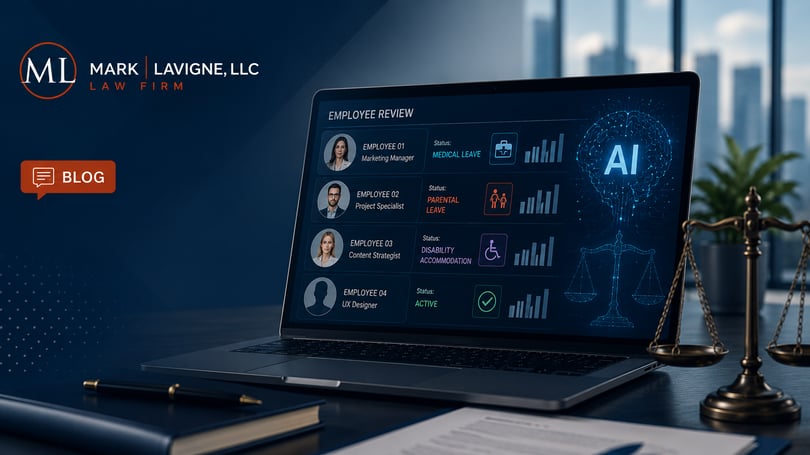
A recently filed lawsuit against Meta has brought this issue into the national spotlight. The lawsuit alleges that the company used AI-assisted performance metrics during a large reduction in force, resulting in employees on medical leave, parental leave, and disability accommodations being disproportionately selected for layoff. Meta has denied the allegations and maintains that people—not AI—made the final employment decisions.
Regardless of how that case is ultimately decided, it serves as an important reminder for both employers and employees in New Jersey: using artificial intelligence does not excuse unlawful employment discrimination.
AI Does Not Override Employment Laws
Employers may use technology to assist with workforce decisions, but they remain responsible for ensuring those decisions comply with federal and New Jersey employment laws.
If an AI system measures employee productivity based solely on recent output, employees who are legally protected because they are:
- Taking FMLA leave
- Recovering from childbirth
- Receiving a reasonable accommodation for a disability
- Caring for a seriously ill family member
- Taking protected medical leave
- The New Jersey Law Against Discrimination (NJLAD)
- The New Jersey Family Leave Act (NJFLA)
- The federal Family and Medical Leave Act (FMLA)
- The Americans with Disabilities Act (ADA)
- The Pregnant Workers Fairness Act
- The Pregnancy Discrimination Act
- Are pregnant
- Have a disability
- Requested a reasonable accommodation
- Took protected medical or family leave
- Exercised protected employment rights
- Maternity leave
- Paternity leave
- Medical leave
- Disability leave
- Military leave
- Other legally protected absences
- Taking maternity or parental leave
- Requesting FMLA leave
- Requesting a disability accommodation
- Returning from medical leave
- Reporting workplace discrimination or harassment
- Filing a wage and hour complaint
- Reporting illegal conduct or whistleblower activity
Could receive artificially low performance scores simply because they were exercising their legal rights.
If those scores are then used during layoffs without considering protected leave or accommodations, the employer could face claims of discrimination or retaliation.
New Jersey Provides Strong Employee Protections
New Jersey employees are protected under numerous state and federal laws, including:
These laws generally prohibit employers from treating employees less favorably because they:
Simply replacing a human decision-maker with an algorithm does not eliminate these legal obligations.
Could AI Create “Hidden” Discrimination?
One of the biggest concerns employment lawyers are watching is whether AI systems unintentionally create discrimination.
An algorithm may appear neutral on its face, yet still disproportionately affect certain groups of employees. For example, if an AI system rewards uninterrupted productivity, it could consistently disadvantage employees who took:
In employment law, this type of issue is often referred to as disparate impact—when a seemingly neutral policy disproportionately harms members of a protected class.
As more employers adopt AI-driven workplace tools, courts across the country will likely continue to address how traditional discrimination laws apply to these emerging technologies.
What Should Employees Do After a Layoff?
Not every layoff is unlawful. Employers are generally permitted to reduce their workforce for legitimate business reasons.
However, employees should consider speaking with an experienced New Jersey employment lawyer if they were selected for layoff shortly after:
The timing of a layoff can sometimes be evidence that warrants further legal review.
Reviewing Layoffs in the Age of Artificial Intelligence
Artificial intelligence is likely to become a permanent part of hiring, performance evaluations, and workforce management. While these technologies may improve efficiency, they do not replace an employer’s obligation to comply with employment laws.
Whether a decision is made by a supervisor, a committee, or an AI-assisted ranking system, employers remain responsible for ensuring that protected employees are not unfairly disadvantaged.
If you believe your layoff may have been influenced by discrimination, retaliation, or the misuse of AI-based performance evaluations, it is important to have the circumstances reviewed by an experienced employment attorney.
Contact a New Jersey Employment Lawyer
The employment attorneys at Mark | Lavine, LLC represent employees throughout New Jersey in matters involving wrongful termination, pregnancy discrimination, disability discrimination, FMLA violations, retaliation, whistleblower claims, severance agreements, and workplace discrimination.
If you were selected for a layoff after taking protected leave or requesting a workplace accommodation, contact our office to discuss your legal rights and determine whether your employer’s actions complied with New Jersey and federal employment laws.

Related Posts
.png?width=112&name=www.NewJerseyAttorneys.com%20(1).png)

.png?width=400&name=www.NewJerseyAttorneys.com%20(1).png)